The revival of national games is of interest and attention, as they are not only an exciting way to spend time but also an important aspect of education. The origins of games date back to ancient times.
The Sumerian civilization, one of the earliest known cultures, did indeed have its own intellectual board games. Archaeological finds show that the Sumerians played games with pieces and boards that may have resembled modern checkers or backgammon, as well as dice games. Very little attention is paid to tabletop games in Abkhazia.
After the war, Inga Shamba, a senior researcher at the Ethnographic Museum of Abkhazia, discovered an artifact in the museum's collection: a wooden board with pull-out compartments for pieces of two colors – black and white.
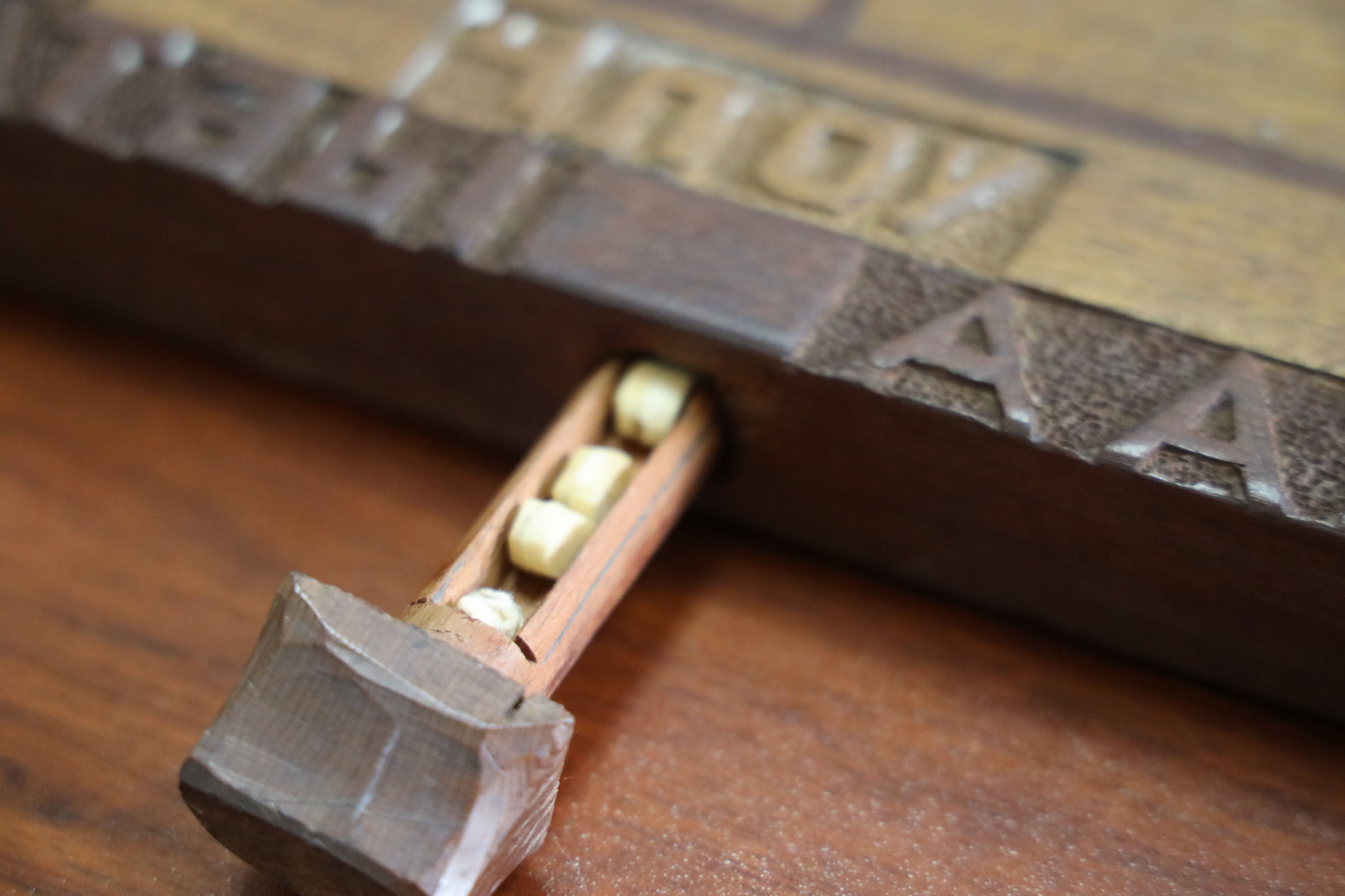
Intrigued by the board's origin and purpose, Inga discovered that the artifact had been found during an expedition to Ochamchira in 1975, led by Yermolai Adjinjal and Tach Gitsba, who were visiting the Avidzba family.
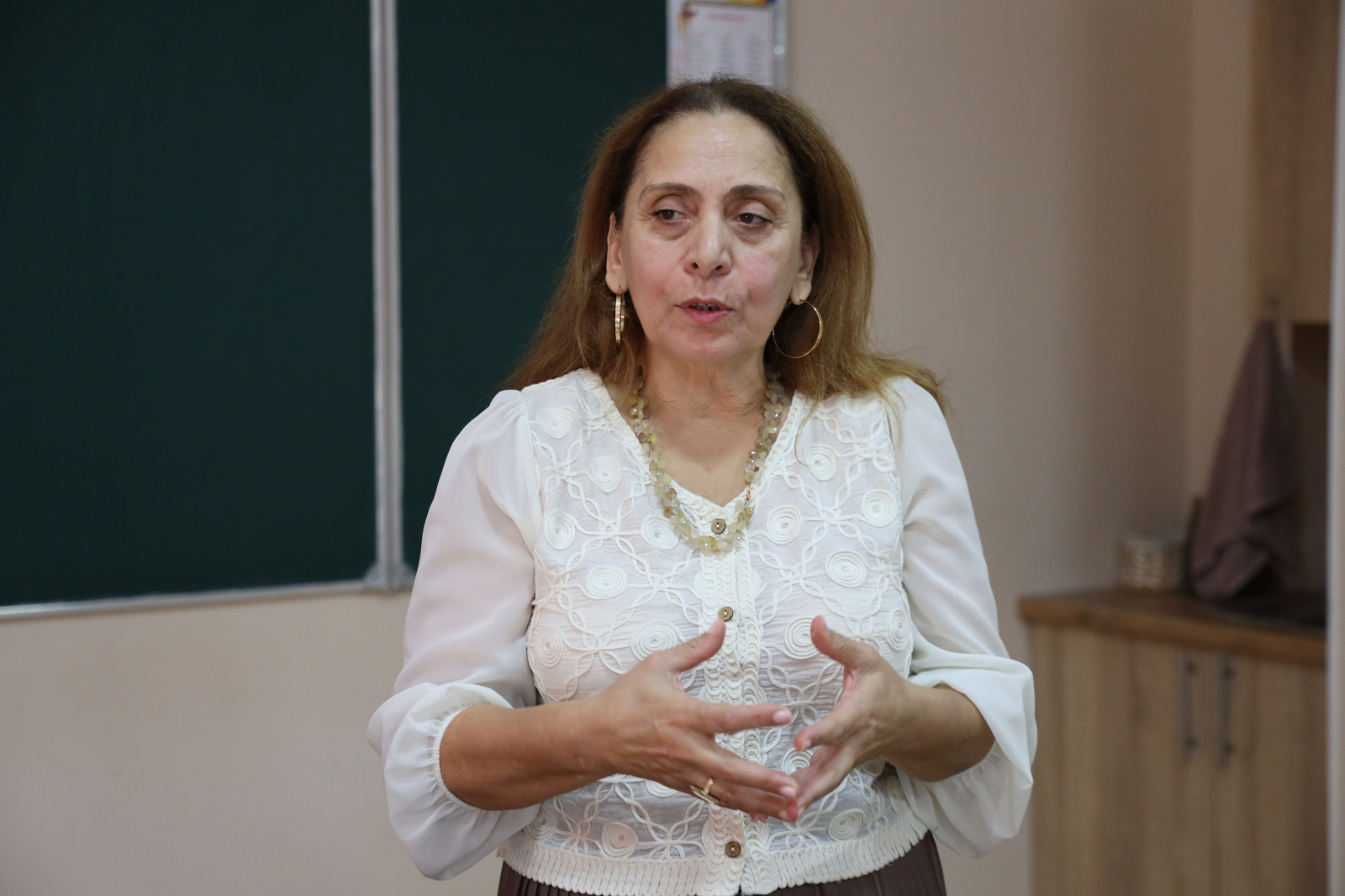
It became known that the game had been recreated by the master from stories told by his father, blacksmith Luman Avidzba, a native of the village of Aatsy in the Gudauta region and a veteran of the Great Patriotic War.
Today, this model is an exclusive exhibit at the Museum of Ethnography of Abkhazia.
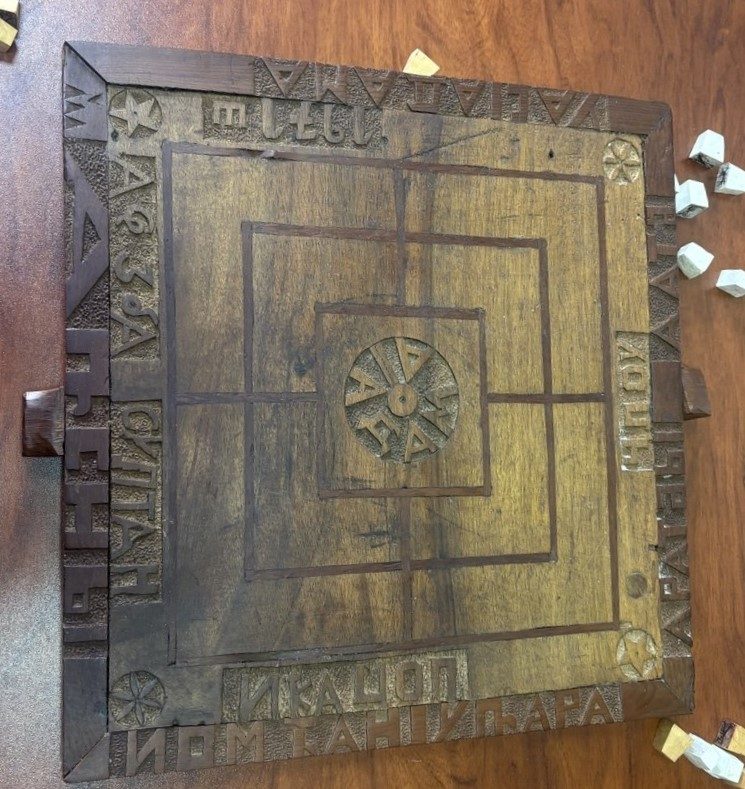
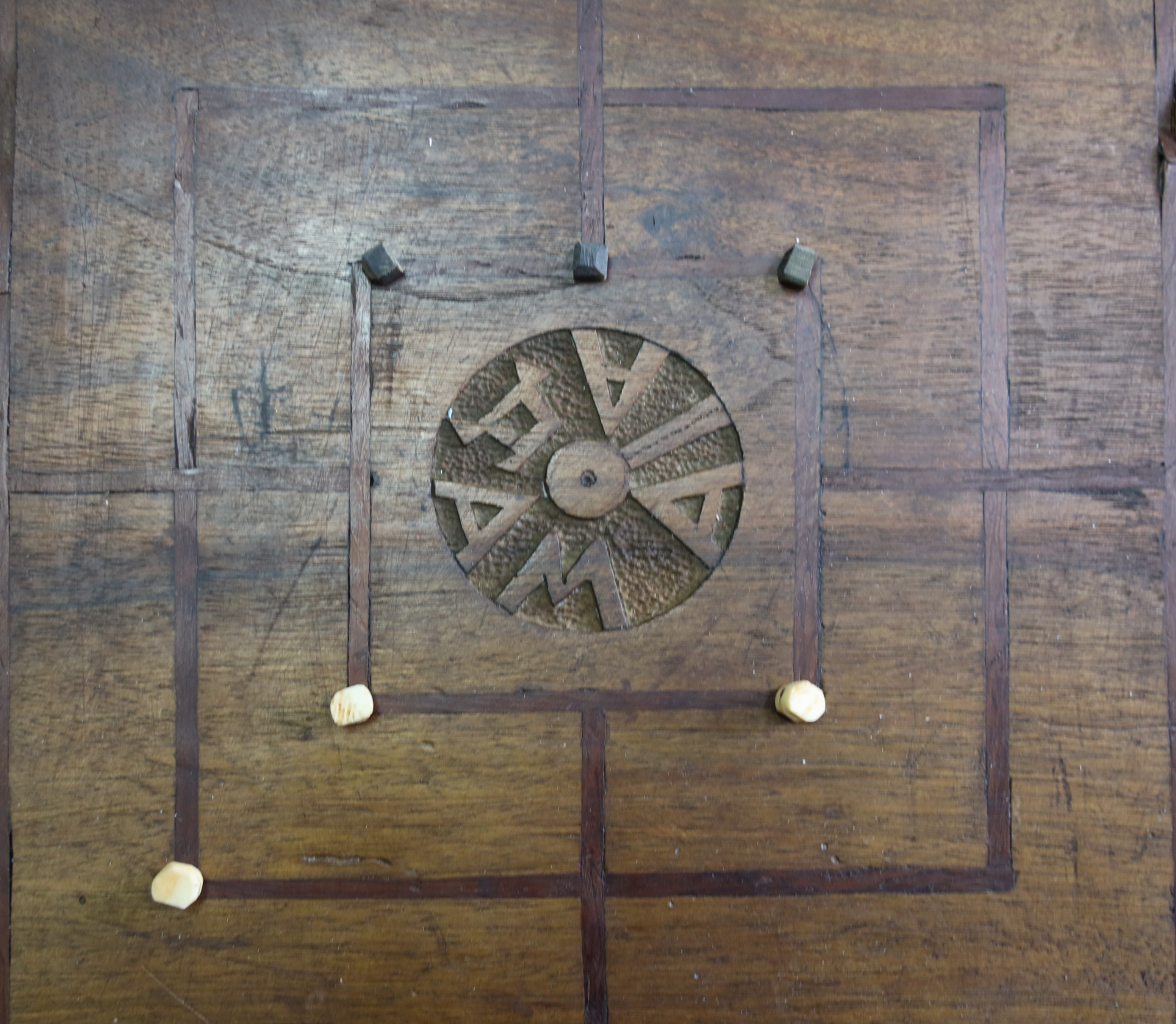
The rectangular game board bears the author's personal signature and preserves the history of its creation and the rights to the piece. Additional rows around the perimeter indicate the author's name (Sultan Avidzba), the natural material from which the piece is made (mahogany, yew, and walnut), the place and date of its creation (Kutol, 1971), as well as the inscriptions "Apsny," "Play Adama," and the warning "do not gamble." All the inscriptions are carved in the Abkhaz language. The game itself consists of three squares (large, medium, and small) connected by vertical lines. In the center of the game board is a circle with the inscription "Adama" and a key-shaped figure. Rosettes depicting stars and petals are carved into the corners of the game board.
The "Adama" game is one of those rare times when it is mentioned in the Abkhazian culture. The ethnographic museum exhibit is an ancient board game with roots in the Sumerian civilization. This game, with its complexity and variety, has significant educational value and is considered one of the oldest known strategy games. Although the rules have not been fully preserved, they are believed to have included elements of strategy and chance. One variation involves lining up the dice horizontally, vertically, or diagonally, reminiscent of the modern tic-tac-toe game.
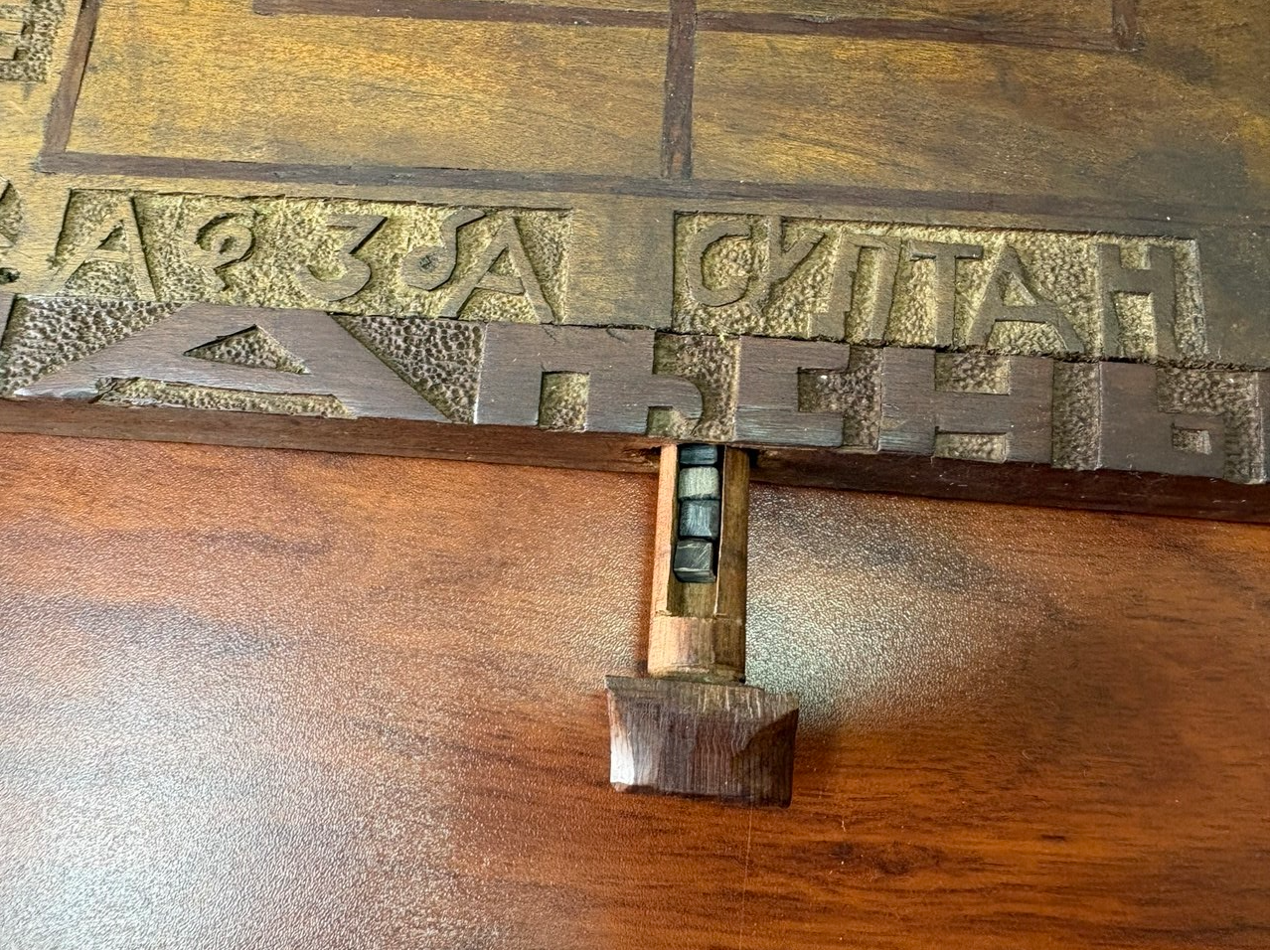
We can't call it an Abkhazian national game today, but we can certainly say that it was well known to our ancestors. "Adama", like other board games of the time, played an important role in social life, facilitating interaction and the exchange of cultural experiences. It could also serve as a means of teaching strategic thinking and planning, requiring participation, attention, reasoning, memory, imagination, willpower, dexterity, and other physical and mental abilities.
Similar stone-based artifacts have also been discovered in the Sumerian civilization.
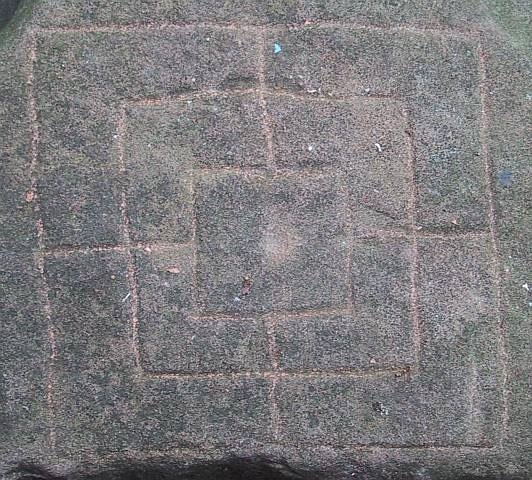
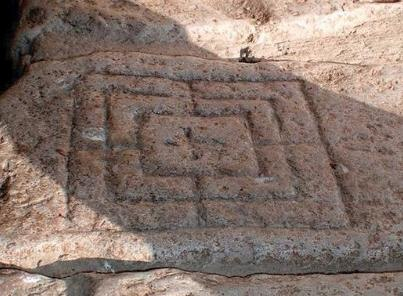
Although the specific rules of the games survived are not always known, archaeological finds provide insight into how the Sumerians enjoyed intellectual entertainment.